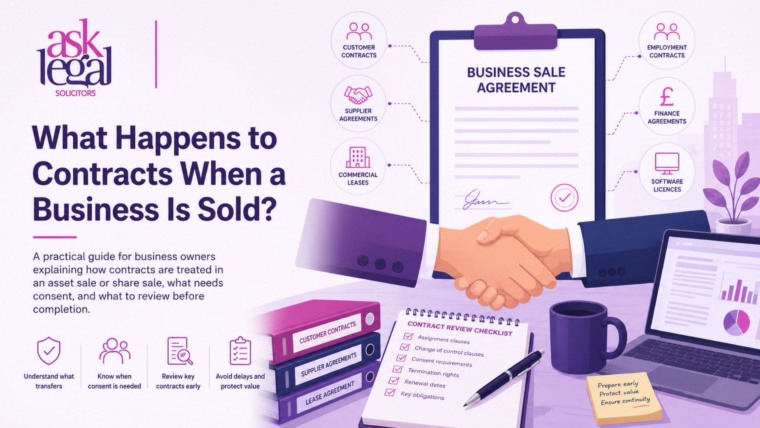


Key Points
- The legal cost of selling a business depends on the structure of the sale, the complexity of the business, and the amount of legal work required.
- An asset sale and a share sale can involve different levels of due diligence, drafting, negotiation, and completion work.
- Solicitors do more than prepare a contract. They help manage buyer enquiries, risk allocation, warranties, indemnities, employees, premises, and completion requirements.
- Costs can increase if documents are missing, negotiations become lengthy, legal issues are uncovered, or third-party consents are needed.
- Good preparation before going to market can help the transaction progress more efficiently and reduce avoidable delays.
Why Do Legal Costs Vary When Selling A Business?
Legal costs vary because business sales vary. The work required to sell a small owner-managed business with limited assets will usually be different from selling a company with employees, premises, key contracts, finance arrangements, licences, disputes, and detailed buyer due diligence. The cost may depend on factors such as:- Whether the sale is an asset sale or share sale.
- The number and type of assets being transferred.
- Whether employees are involved.
- Whether the business trades from commercial premises.
- How many contracts need to be reviewed or transferred.
- Whether landlord, lender, supplier, or customer consent is needed.
- The amount of buyer due diligence.
- The level of negotiation over warranties and indemnities.
- Whether any disputes, debts, or compliance issues are discovered.
- How quickly the parties want to complete.
Key point:
The cost of selling a business is not just about preparing the Business Sale Agreement. It is about the legal work needed to identify issues, answer buyer enquiries, manage risk, and complete the transaction properly.
The cost of selling a business is not just about preparing the Business Sale Agreement. It is about the legal work needed to identify issues, answer buyer enquiries, manage risk, and complete the transaction properly.
Does The Structure Of The Sale Affect Legal Costs?
Yes. The structure of the transaction can make a significant difference. A business sale is often structured as either an asset sale or a share sale. In an asset sale, the seller sells specific assets of the business. This may include goodwill, equipment, stock, intellectual property, customer information, contracts, and other agreed assets. In a share sale, the seller sells the shares in the company that owns the business. The company continues to exist, but ownership changes. The structure affects what needs to be checked, what documents are needed, what liabilities are being dealt with, and how risk is allocated between the parties. You may find our guide on asset purchase vs share purchase useful, as many of the same issues affect sellers as well as buyers.Why Might An Asset Sale Cost Differently From A Share Sale?
An asset sale often requires detailed work to identify exactly what is being transferred. This may involve checking:- Which assets are included in the sale.
- Which liabilities, if any, the buyer is taking on.
- Whether contracts can be transferred.
- Whether employees transfer under TUPE.
- Whether a lease assignment or landlord consent is needed.
- Whether intellectual property, websites, trading names, or domain names need separate transfer steps.
What Legal Work Does A Solicitor Carry Out When Selling A Business?
A solicitor's role is to help the seller progress the transaction while managing legal risk. This may include:- Reviewing the proposed heads of terms.
- Advising on the structure of the sale.
- Preparing or reviewing the Business Sale Agreement.
- Responding to buyer due diligence enquiries.
- Reviewing and preparing disclosure documents.
- Advising on warranties and indemnities.
- Dealing with employee and TUPE issues where relevant.
- Handling commercial lease assignment documents or landlord consent issues.
- Reviewing contracts and transfer requirements.
- Preparing completion documents.
- Managing completion and post-completion legal steps.
Responding To Buyer Due Diligence Enquiries
Buyer due diligence is one of the main reasons legal costs can vary. The buyer will usually ask questions and request documents before committing to completion. These questions may cover contracts, employees, property, assets, intellectual property, disputes, debts, compliance, insurance, and other business records. For sellers, the task is not simply to send everything across. The responses need to be accurate, consistent, and carefully managed. This matters because inaccurate or incomplete replies can create problems later, especially where the buyer relies on them when negotiating warranties or deciding whether to proceed. Our buying a business legal checklist shows the type of issues buyers are likely to investigate during the transaction.Preparing And Negotiating The Business Sale Agreement
The Business Sale Agreement is the main contract that records the terms of the sale. It should usually deal with:- What is being sold.
- The purchase price and payment terms.
- Completion conditions.
- Assets and liabilities.
- Employees.
- Contracts.
- Premises.
- Warranties.
- Indemnities.
- Restrictions on the seller after completion.
- Post-completion obligations.
Warranties And Indemnities
Warranties and indemnities often play a major role in business sale negotiations. A warranty is a statement about the business. For example, the seller may be asked to give warranties about contracts, employees, disputes, accounts, compliance, or liabilities. An indemnity is a promise to cover a specific risk if it arises. For example, if a known dispute exists, the buyer may ask the seller to remain responsible for that issue after completion. These clauses matter because they decide who carries risk if something turns out to be wrong or if a known issue creates loss later. For sellers, legal advice is important because warranties and indemnities can create ongoing exposure after the business has been sold.
Practical point:
A seller should not treat warranties as standard wording. They can have real consequences if they are inaccurate, too broad, or not properly qualified by disclosure.
A seller should not treat warranties as standard wording. They can have real consequences if they are inaccurate, too broad, or not properly qualified by disclosure.
Employees And TUPE
If employees are involved, legal costs may increase because employment issues need to be handled carefully. In an asset sale, employees may transfer to the buyer under TUPE where there is a relevant business transfer. This can involve information and consultation obligations and careful treatment of employment liabilities. In a share sale, the employer usually remains the same company, but the buyer will still want to review employment contracts, disputes, salaries, benefits, holiday entitlement, and potential claims. Employee issues matter because they can affect risk, timing, and negotiation. If they are overlooked, they can cause disputes after completion.Commercial Lease Assignments And Landlord Consent
If the business trades from commercial premises, the lease position can add legal work. In an asset sale, the lease may need to be assigned to the buyer or replaced with a new lease. This will often require landlord consent and separate legal documents. The landlord may also require:- References from the buyer.
- A rent deposit.
- A guarantee.
- Payment of the landlord's legal costs.
- Compliance with lease assignment conditions.
Completion And Post-Completion Legal Work
Completion is the point where the transaction legally takes effect. The legal work around completion may include checking final documents, obtaining signatures, confirming funds, dealing with completion statements, transferring assets, notifying relevant parties, and handling post-completion filings or notices. Post-completion work may include:- Confirming transfer of assets.
- Serving notices.
- Dealing with Companies House filings where relevant.
- Updating registers.
- Handling lease or contract formalities.
- Completing agreed post-completion obligations.
Other Professional Costs That May Arise
Legal fees are only one part of the overall cost of selling a business. Other professional costs may include:- Accountant's fees.
- Tax advice.
- Business broker fees.
- Valuation advice.
- Landlord's legal costs where lease consent is needed.
- Lender or finance-related costs.
- Specialist regulatory advice where the business operates in a regulated sector.
Common Reasons Legal Costs Increase
Some increases in legal work are unavoidable. Others can often be reduced with good preparation.Why Costs Can Increase
Missing documents that need to be located or recreated
Unclear ownership of assets, websites, domains, or intellectual property
Extensive buyer due diligence enquiries
Lengthy negotiation over warranties and indemnities
Employee issues or TUPE complications
Commercial lease assignment delays
Disputes, debts, complaints, or compliance issues discovered late
Changes to the deal structure after legal work has started
How Sellers Can Prepare Early
Preparation can make a real difference to how efficiently the transaction progresses. Before or shortly after agreeing heads of terms, sellers should consider gathering:- Company records.
- Accounts and financial records.
- Key customer and supplier contracts.
- Employee contracts and payroll information.
- Commercial lease documents.
- Asset lists.
- Intellectual property records.
- Licences and regulatory documents.
- Insurance documents.
- Details of disputes, complaints, or debts.
- Finance agreements or security documents.
Seller preparation tip:
If a buyer is likely to ask for a document, find it early. Missing paperwork often causes more delay than the legal issue itself.
If a buyer is likely to ask for a document, find it early. Missing paperwork often causes more delay than the legal issue itself.
Frequently Asked Questions
How much does it cost to sell a business?
The cost depends on the structure and complexity of the transaction. A straightforward asset sale may require less legal work than a share sale involving detailed buyer due diligence, employees, premises, warranties, indemnities, and post-completion obligations. A solicitor will usually need to understand the basic transaction before giving a meaningful estimate.Who pays the legal fees when selling a business?
Usually, each party pays their own solicitor's fees. The seller pays for their legal advice and the buyer pays for their own legal advice. However, there may be additional costs, such as landlord legal fees, depending on the transaction documents and any third-party consent requirements.Do buyers and sellers each need their own solicitor?
In most business sales, yes. The buyer and seller have different interests. The buyer wants protection against risk. The seller usually wants to complete the sale while limiting future exposure. Separate advice helps each party understand their own position.What other professional costs might arise?
Other costs may include accountant's fees, tax advice, valuation advice, business broker fees, landlord legal costs, lender costs, or specialist regulatory advice. These are separate from the solicitor's legal fees and will depend on the business and transaction.Can legal costs be reduced?
Some costs can be reduced by preparing early, keeping documents organised, agreeing clear heads of terms, responding promptly to enquiries, and identifying issues before they become urgent. However, it is not always sensible to reduce legal work if the transaction carries real risk. The aim should be efficient legal work, not cutting corners.What factors make a business sale more expensive?
Costs may increase where there is extensive due diligence, missing documents, complex contracts, employees, TUPE issues, commercial lease assignments, disputes, liabilities, regulatory issues, or heavy negotiation over warranties and indemnities. A change in deal structure can also increase work if documents need to be revised.Does an asset sale cost less than a share sale?
Not always. An asset sale may be more straightforward in some cases, but it can still involve complex transfer issues, employee matters, contract assignments, and lease consent. A share sale may involve wider due diligence and more negotiation over historic liabilities. The cost depends on the transaction.Why does the buyer's due diligence affect the seller's costs?
The seller usually needs to respond to the buyer's questions and provide supporting documents. If the buyer raises detailed enquiries, asks follow-up questions, or identifies issues that require negotiation, the seller's solicitor may need to spend more time dealing with those points.Do warranties and indemnities affect legal costs?
They can. Warranties and indemnities are often heavily negotiated because they determine what risk the seller may carry after completion. The wider or more specific the protections requested by the buyer, the more legal input may be needed.What Should You Do Next?
If you are planning to sell a business, it is sensible to understand the likely legal work before committing to terms with a buyer.
The cost of selling a business is not simply a solicitor's fee. It depends on the structure of the transaction, the complexity of the business, the buyer's due diligence, and the level of protection being negotiated in the Business Sale Agreement.
You may also find these related guides useful:
- Buying a Business Legal Checklist
- Should I Buy the Business or Just Its Assets?
- Do I Inherit Debts When Buying a Business?
Need advice on selling a business?
Our team can help you understand the legal work involved, prepare for buyer due diligence, and deal with the Business Sale Agreement, warranties, indemnities, completion, and post-completion steps.
Call 0161 436 0000
Read more: Business Transfer
Our team can help you understand the legal work involved, prepare for buyer due diligence, and deal with the Business Sale Agreement, warranties, indemnities, completion, and post-completion steps.
Call 0161 436 0000
Read more: Business Transfer