Key Points
- Contracts do not always automatically transfer when a business is sold.
- What happens to contracts often depends on whether the sale is structured as an asset sale or a share sale.
- Customer contracts, supplier agreements, leases, finance arrangements, software licences and employment contracts can all affect the value of the transaction.
- Some contracts require consent before they can be assigned, transferred or continued after completion.
- Legal due diligence helps identify which contracts are essential, which contain risks, and what needs to be dealt with in the Business Sale Agreement.
Why Are Contracts So Important When Selling A Business?
Contracts are often the relationships that allow the business to operate. They may include:- Customer agreements.
- Supplier contracts.
- Commercial leases.
- Equipment finance agreements.
- Vehicle leases.
- Software subscriptions.
- Maintenance agreements.
- Distribution agreements.
- Franchise agreements.
- Service contracts.
- Employment contracts.
- Intellectual property licences.
- Website, database and hosting arrangements.
Key point:
A business sale is not just about transferring a name, stock or equipment. The buyer often wants the working relationships that generate income and keep the business running.
A business sale is not just about transferring a name, stock or equipment. The buyer often wants the working relationships that generate income and keep the business running.
Do Contracts Automatically Transfer When A Business Is Sold?
Not always. There is no single answer because it depends on the transaction structure and the contract wording. Some contracts may be transferred with consent. Some may continue automatically because the contracting company remains the same. Some may prohibit assignment. Some may allow the other party to terminate if ownership changes. This is why contracts are reviewed carefully during legal due diligence and dealt with in the Business Sale Agreement.Asset Sale vs Share Sale: Why The Structure Matters
The treatment of contracts is often very different depending on whether the transaction is an asset sale or a share sale. In an asset sale, the buyer purchases selected assets of the business. The seller may need to assign, novate or otherwise transfer contracts to the buyer. Many contracts require the other party's consent before this can happen. In a share sale, the buyer purchases the shares in the company that owns the business. The company usually remains the contracting party, so many contracts may continue as before. However, some agreements contain change of control clauses that may require consent or allow termination if the company is sold. You may find our guide on whether to buy the business or just its assets useful, as the same distinction affects how contracts are handled.How Are Contracts Reviewed During Legal Due Diligence?
Buyers review contracts because they need to understand what the business depends on. They will usually want to know:- Which contracts are essential to the business.
- Whether contracts can continue after completion.
- Whether assignment or consent is required.
- Whether there are termination rights.
- Whether there are change of control clauses.
- Whether any contracts are close to expiry.
- Whether any terms are unusually risky or restrictive.
- Whether there are disputes or breaches.
What Happens To Customer Contracts?
Customer contracts may represent future income and goodwill. A buyer will want to know whether important customers are tied into written agreements, whether those agreements can continue after completion, and whether customers have the right to terminate. In an asset sale, customer contracts may need to be assigned or replaced. In some cases, the customer must agree before the contract can move to the buyer. In a share sale, the customer contract may remain with the same company, but the agreement may still contain a change of control clause. If customer contracts are informal, expired, unsigned or close to ending, this can affect the buyer's confidence and may affect the terms of the sale.What Happens To Supplier Contracts?
Supplier agreements can affect pricing, stock availability, exclusivity, credit terms and continuity of supply. A buyer will usually want to know whether the business can keep using key suppliers after completion and whether any consent is needed. Problems can arise where:- The supplier contract cannot be assigned.
- The supplier can terminate on short notice.
- The agreement is informal or undocumented.
- Pricing is due to change.
- The seller has unpaid invoices.
- The supplier relationship depends personally on the seller.
What Happens To Commercial Leases?
Commercial leases often need separate attention during a business sale. If the business trades from premises, the buyer will usually need to know whether they can continue using those premises after completion. In an asset sale, the lease may need to be assigned to the buyer. This often requires landlord consent and a document known as a Licence to Assign. The landlord may ask for references, a rent deposit, a guarantee, payment of legal costs, or confirmation that lease conditions have been met. In a share sale, the tenant may remain the same company, but the lease should still be checked for change of control restrictions or other consent requirements. Lease issues can delay completion if they are left too late.
Practical point:
If the premises are essential to the business, the lease should be reviewed early. A buyer may not want to complete unless they know the business can continue trading from the same location.
If the premises are essential to the business, the lease should be reviewed early. A buyer may not want to complete unless they know the business can continue trading from the same location.
What Happens To Employment Contracts?
Employees do not simply disappear because a business is sold. In an asset sale, TUPE may apply where there is a relevant business transfer. This can mean employees transfer to the buyer with their existing rights preserved. There may also be information and consultation obligations. In a share sale, the employer usually remains the same company, although the ownership of that company changes. Employment contracts matter because staff may be central to the value of the business. Buyers will usually want to review contracts, pay, benefits, holiday entitlement, disputes, grievances and potential claims.What Happens To Finance Agreements?
Finance agreements can affect what the seller is able to transfer. These may include equipment finance, vehicle leases, asset finance, lending facilities, hire purchase agreements or security arrangements. A buyer will want to know whether assets are owned outright or financed. If an asset is subject to finance, the seller may not be free to transfer it without lender consent or repayment. Finance arrangements can also affect liabilities. For more detail on how debts and liabilities can affect a buyer, see our guide: Do I Inherit Debts When Buying a Business?What Happens To Intellectual Property And Operational Agreements?
Intellectual property and operational contracts can be easy to overlook, but they may be essential to the business. These may include:- Trade marks.
- Trading names.
- Domain names.
- Website agreements.
- Software licences.
- Databases.
- Branding and design rights.
- Social media accounts.
- Hosting arrangements.
- Marketing platform accounts.
Common Contract Issues During A Business Sale
Contract problems are often discovered during due diligence rather than at the start.Common Issues
Contracts that cannot be assigned without consent
Change of control clauses that were overlooked
Missing signed agreements
Expired contracts still being treated as active
Informal verbal arrangements with key customers or suppliers
Commercial leases requiring landlord approval
Supplier agreements that may not continue after completion
Important customer contracts approaching expiry
Can Contracts Stop A Business Sale?
Sometimes, yes. A contract may not stop the sale legally, but it can make the transaction less attractive or more difficult to complete. For example, if a major customer contract cannot be transferred, the buyer may ask for a price reduction. If landlord consent is required and delayed, completion may be postponed. If a supplier refuses to continue, the buyer may need a replacement arrangement before proceeding. The practical question is whether the contract is important enough to affect the value or operation of the business after completion.How Does The Business Sale Agreement Deal With Contracts?
The Business Sale Agreement should clearly deal with which contracts are included, what consents are needed, and what happens if a contract cannot be transferred or continued. It may include:- A list of contracts being transferred.
- Conditions requiring consent before completion.
- Warranties about the status of key contracts.
- Indemnities for specific known risks.
- Obligations on the seller to help with transfer or handover.
- Post-completion steps where a contract cannot transfer immediately.
What Documents Should Sellers Gather Early?
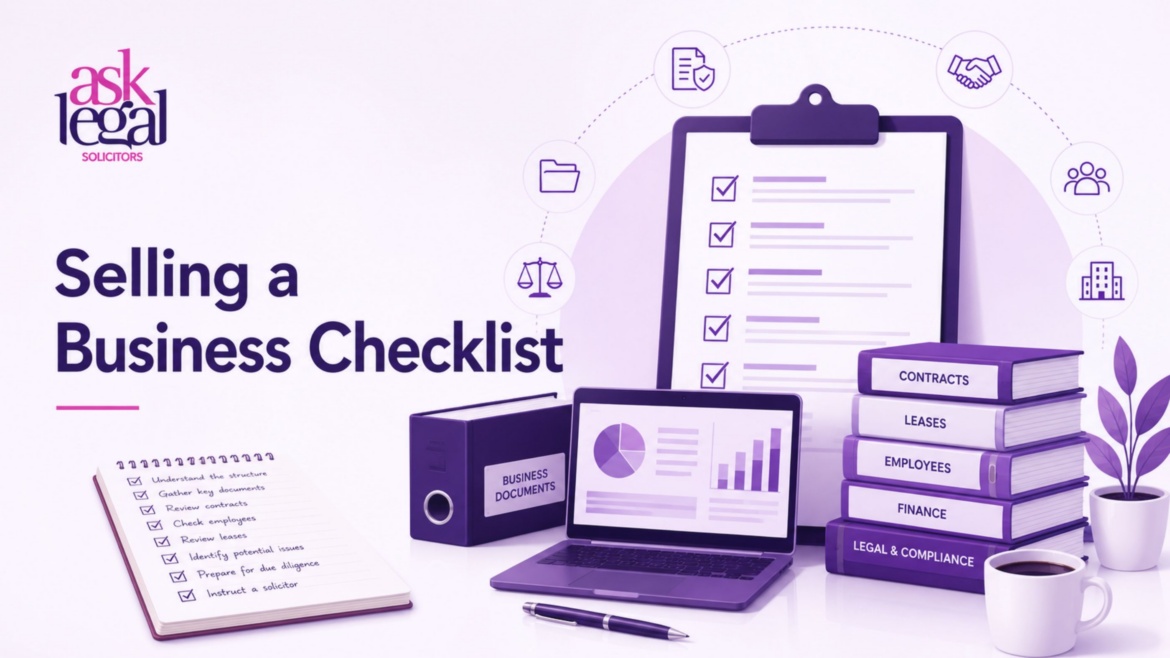
A seller can often make the transaction smoother by preparing contract documents before the business goes to market or before buyer due diligence begins.Seller Document Checklist
Customer contracts
Supplier agreements
Commercial lease documents
Finance agreements
Employment contracts
Software licences
Intellectual property registrations
Maintenance contracts
Distribution or franchise agreements
Website, domain and hosting documents
Insurance documents
Any notices, disputes or breach correspondence
Why Early Preparation Matters
Contract issues are much easier to manage before completion than after a problem has been discovered late. If a seller knows early that a key contract needs consent, that process can be planned. If a commercial lease requires landlord approval, the landlord can be approached in good time. If a customer agreement is unsigned or expired, the parties can decide how to deal with it before it becomes a sticking point. Early preparation does not guarantee a smooth transaction, but it usually gives everyone more control.Frequently Asked Questions
Do contracts automatically transfer when a business is sold?
Not always. In an asset sale, contracts often need to be transferred individually and may require consent. In a share sale, many contracts may continue because the company remains the contracting party, but change of control clauses may still apply.What happens to customer contracts?
Customer contracts may need to be assigned, novated or replaced in an asset sale. In a share sale, they may continue with the company, subject to the contract terms. Key customer contracts should be checked carefully before completion.What happens to supplier contracts?
Supplier contracts may require consent before they can be transferred. The buyer will also want to understand pricing, termination rights, exclusivity, supply obligations and whether the supplier is willing to continue after the sale.What happens to commercial leases?
In an asset sale, the lease may need to be assigned to the buyer, usually with landlord consent. In a share sale, the tenant may remain the same company, but the lease may still contain restrictions or change of control provisions.Can contracts stop a business sale?
They can cause serious issues if they are essential to the business and cannot be transferred or continued. A problem with a key customer, supplier or lease may affect price, timing, or whether the buyer proceeds.What is a change of control clause?
A change of control clause is a contract term that applies when ownership or control of a company changes. It may require consent or allow the other party to terminate the contract if the company is sold.Can a customer or supplier refuse to continue the contract?
That depends on the contract terms and the transaction structure. Some contracts require consent before transfer. Others may allow termination. This is why key contracts should be reviewed before completion.Why are contracts reviewed during legal due diligence?
Contracts are reviewed so the buyer can understand what the business depends on, whether important agreements will continue, whether consent is required, and whether any risks could affect value or trading after completion.Should sellers review contracts before putting the business on the market?
Yes, where possible. Organising contracts early can reduce delays, help identify consent requirements, and make it easier to respond to buyer due diligence enquiries.What Should You Do Next?
If you are preparing to sell a business, it is sensible to identify the contracts the business depends on and check whether they can continue after completion.
Contracts are often one of the most valuable parts of a business, but they do not all automatically transfer when the business is sold. Understanding which agreements continue, which require consent, and which may need to be renegotiated is an important part of preparing for a successful sale.
You may also find these related guides useful:
- Buying a Business
- Buying a Business Legal Checklist
- Should I Buy the Business or Just Its Assets?
- Do I Inherit Debts When Buying a Business?
Need advice on contracts when selling a business?
Our team can help review key contracts, prepare for buyer due diligence, and advise on the Business Sale Agreement, warranties, indemnities, lease issues, completion and post-completion steps.
Call 0161 436 0000
Read more: Business Transfer
Our team can help review key contracts, prepare for buyer due diligence, and advise on the Business Sale Agreement, warranties, indemnities, lease issues, completion and post-completion steps.
Call 0161 436 0000
Read more: Business Transfer

